Take off where you work.
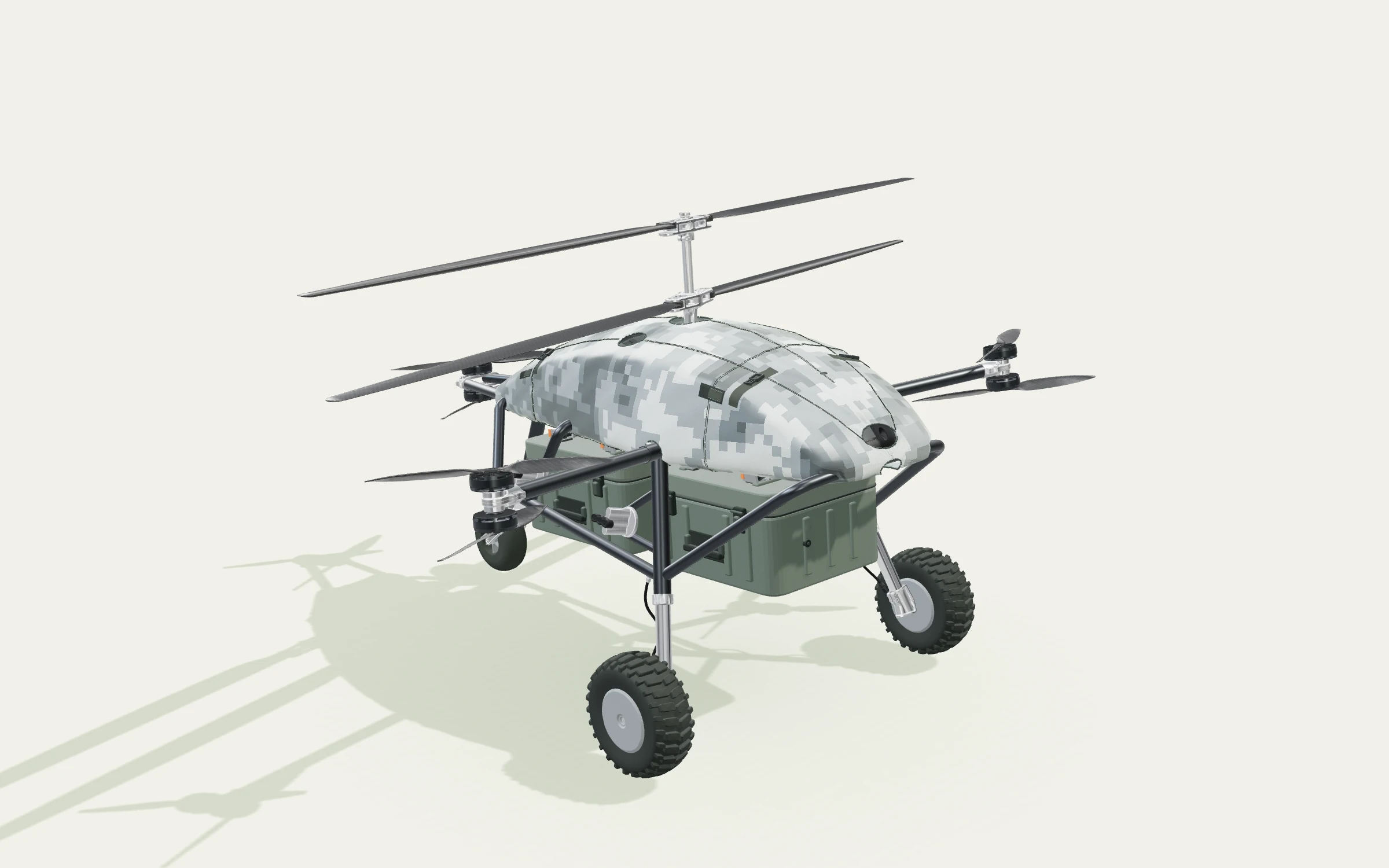
Vertical take-off and landing, with electrically driven wheels for autonomous ground movement. No runway required.
TACTICAL AIR MOBILITY · MEDIUM LIFT
Heavy-fuel endurance. Vertical take-off.
One aircraft, configured around your mission.
You can still explore all specifications below.
TAMML / COMPONENT STUDIO
Drag or use arrow keys · Download a studio render ↗
Two independent containers. One compact aircraft.
Maximum payload
Empty aircraft
Main rotor diameter
UAVHE coaxial powerplant
TAMML brings the reach of heavy fuel and the flexibility of vertical flight to a modular utility platform.
Two counter-rotating main rotors lift the aircraft. Six electric control propellers provide attitude control and precise low-speed handling. The open belly bay accepts cargo, sensors and specialist equipment.
Vertical take-off and landing, with electrically driven wheels for autonomous ground movement. No runway required.
Carry containers, a liquid tank, a transport bag or an optical payload on the same airframe.
Onboard sensors, satellite connectivity and aviation radios connect the aircraft, its operators and ground services.
From everyday logistics to specialist support, choose the equipment that fits the task.
 01—03
Single, tandem or extended cargo containers for supplies and equipment. A transport bag adds another way to carry bulky loads.
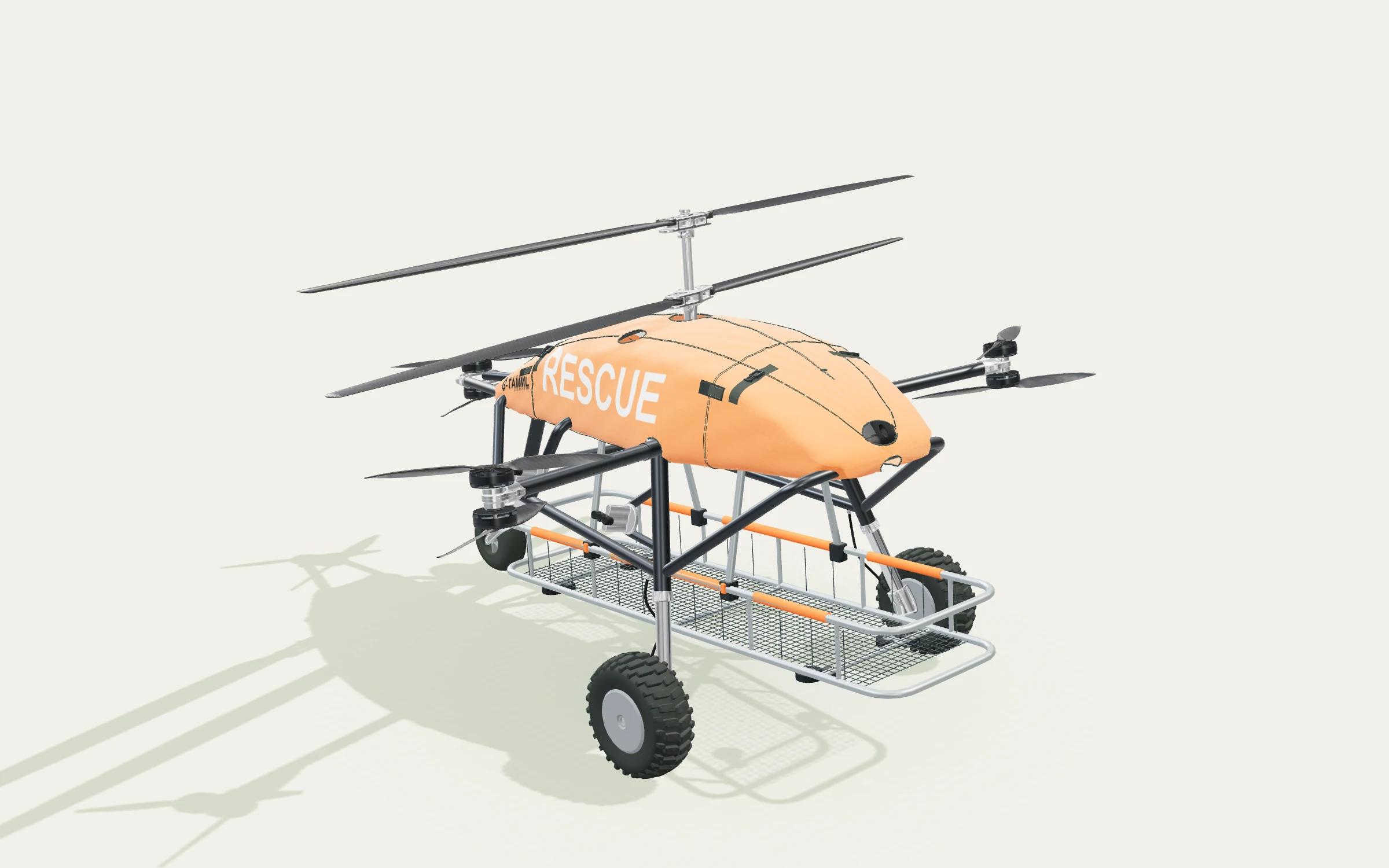 04—05
Deliver medical supplies and relief equipment where access is difficult. Explore the rescue finish and stretcher configuration.
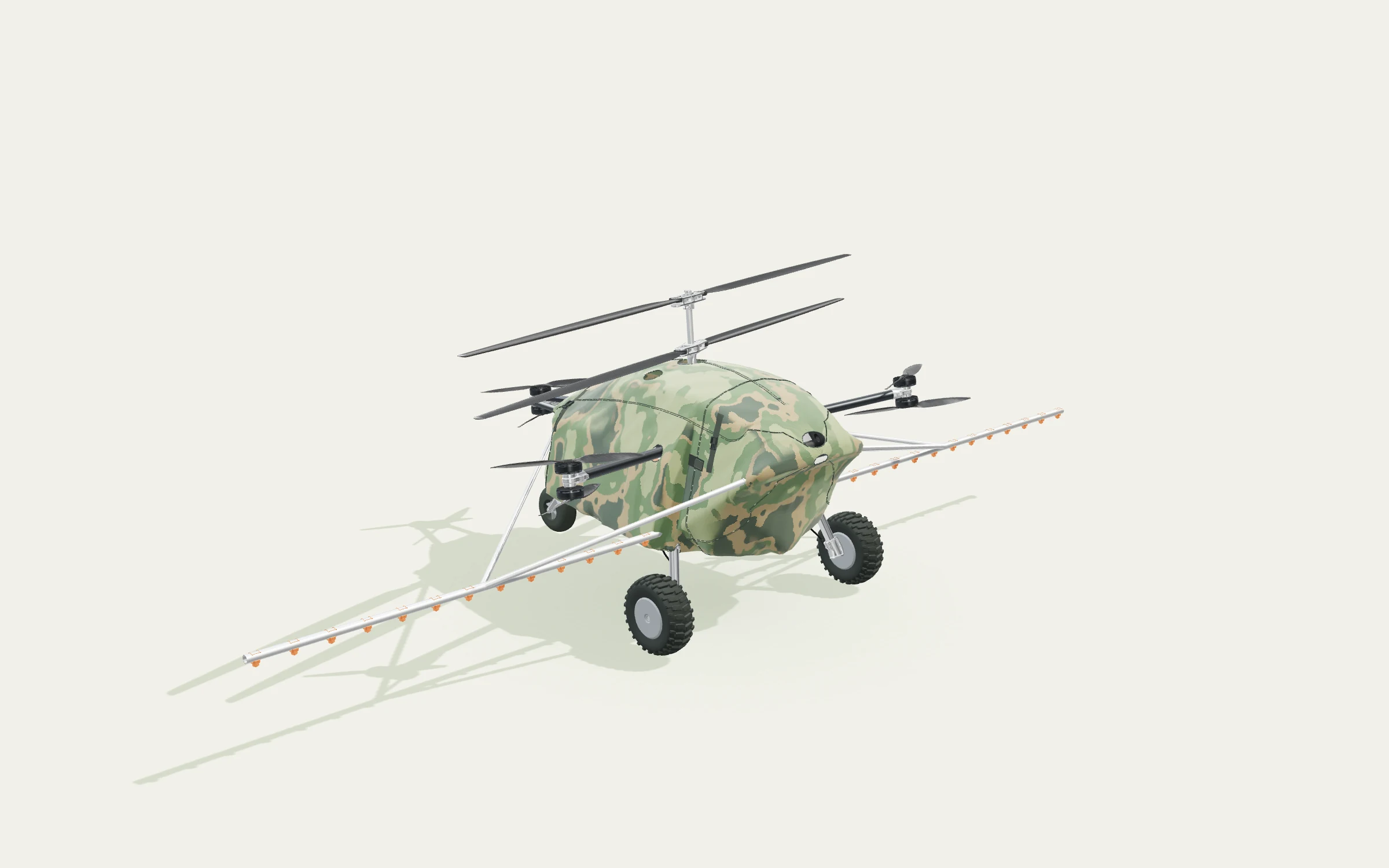 06
A liquid tank and spray booms adapt the aircraft for aerial application, with the same heavy-fuel powerplant.
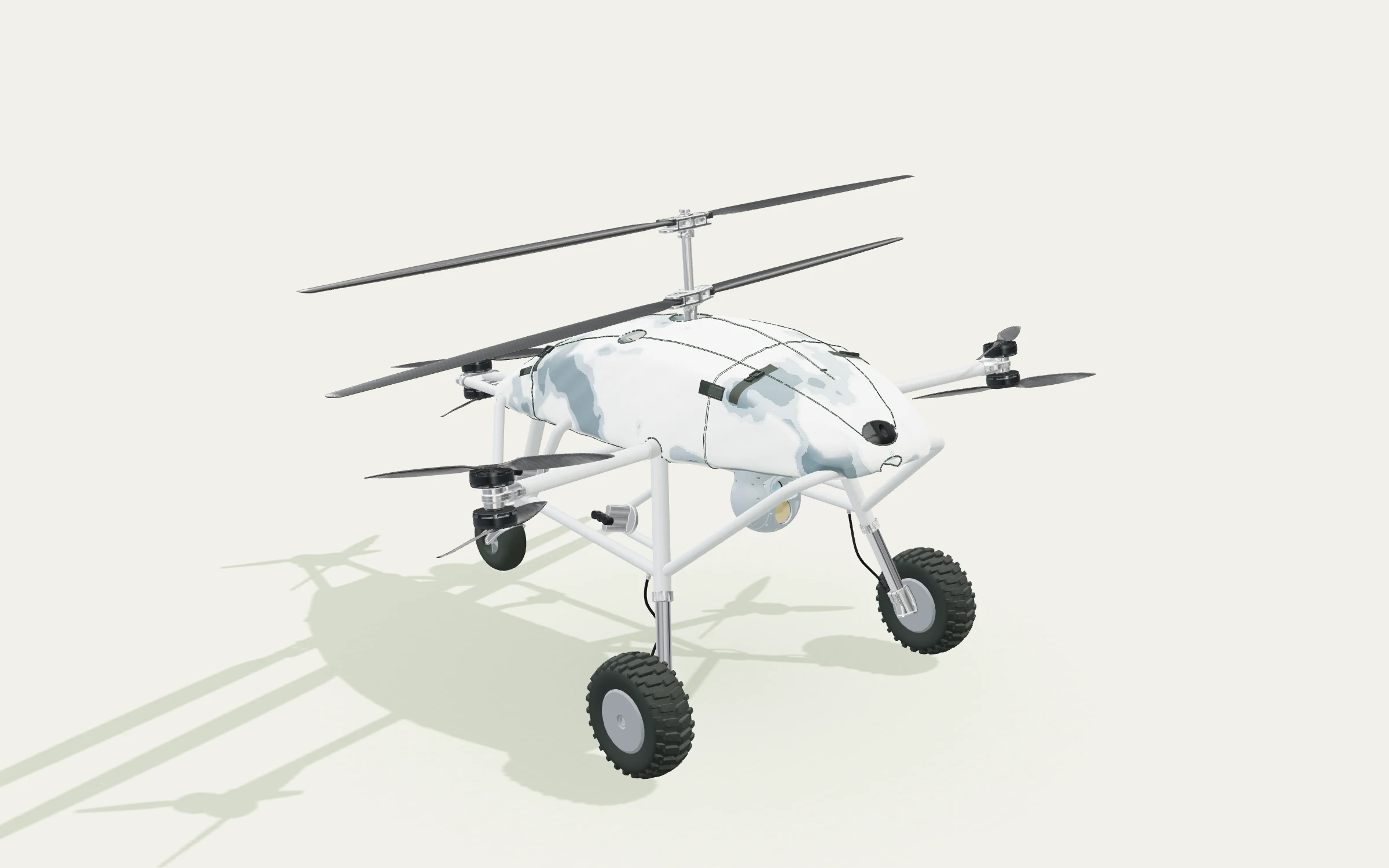 07—09
A dedicated optical payload and an adaptable equipment bay support inspection, observation and mission-specific integration.
AGRICULTURAL MISSION SOFTWARE
TAMML’s agricultural mission software is compatible with the platforms you use to plan and manage field operations.
TWO ENGINES. ONE COAXIAL ASSEMBLY.
A hybrid rotary powerplant. Two UAVHE RW1-79 Wankel engines. One compact coaxial assembly.
The RW2-79C combines 52 hp of engine power with a 22 kW hybrid electric system. Forced-air cooling supports the compact installation. Two counter-rotating, fixed-pitch main rotors provide lift; independently powered coaxial control propellers manage attitude.
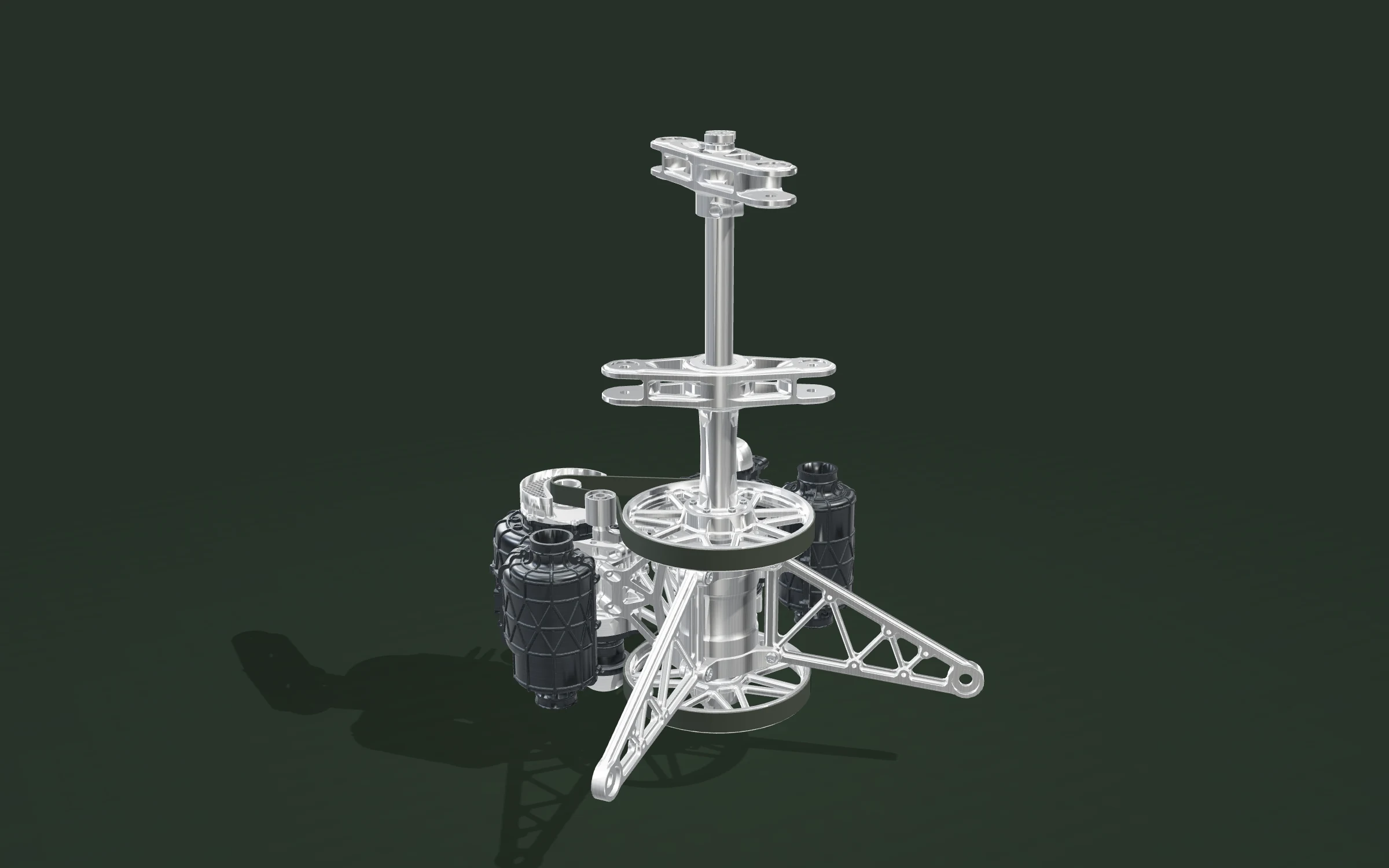 VIEW IN 3D ↗RW2-79C / COAXIAL ASSEMBLY
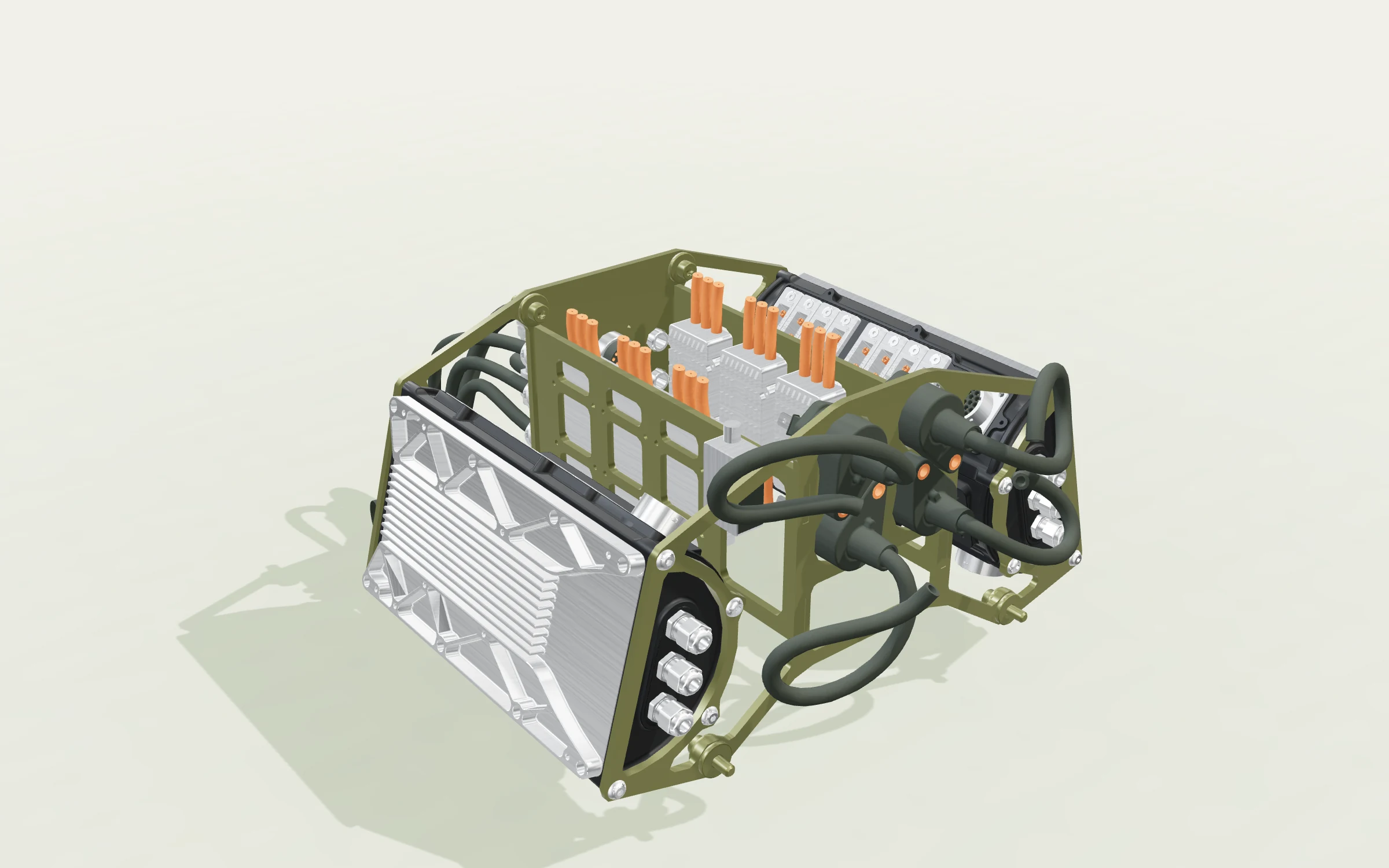
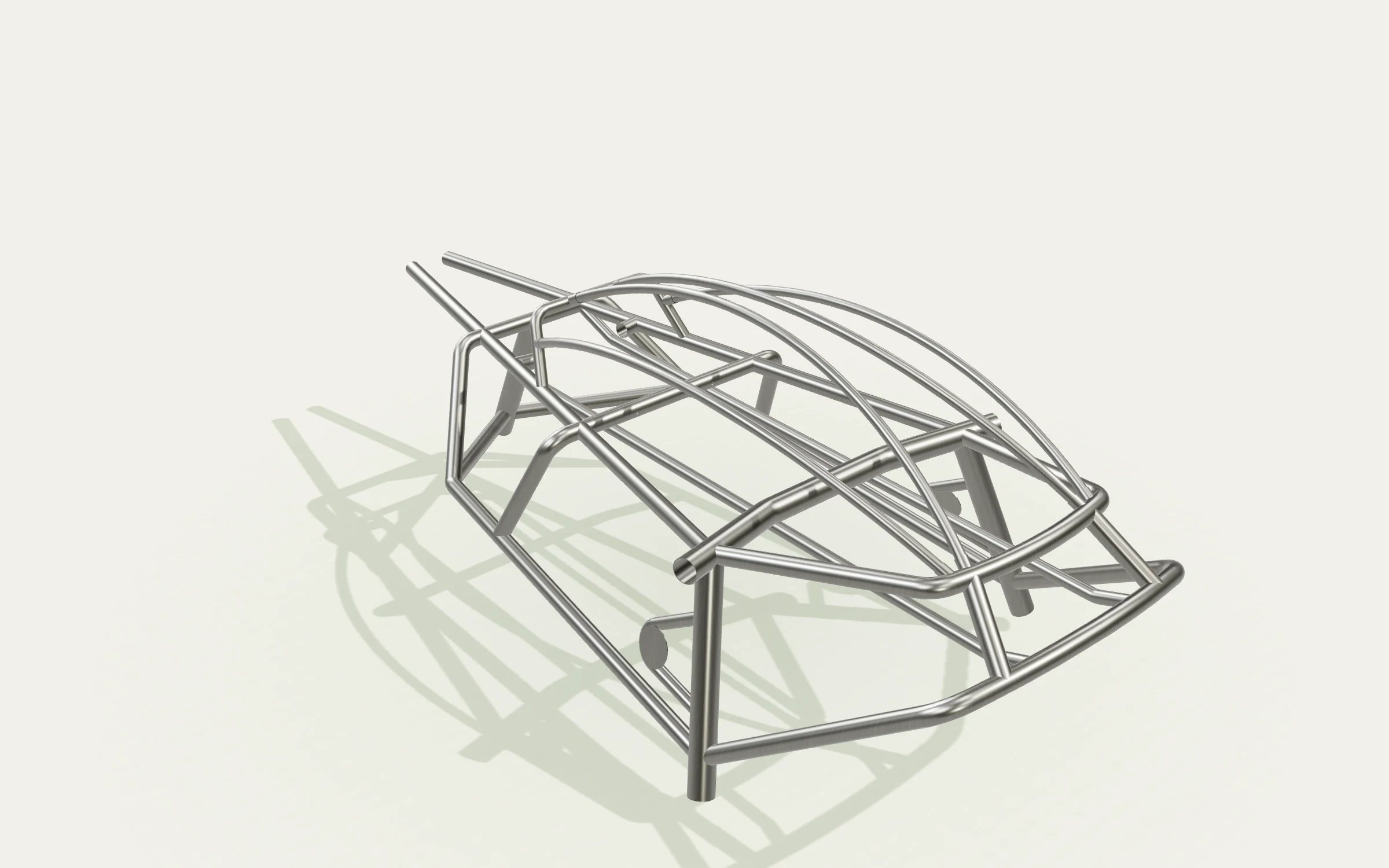
A welded titanium frame, long-travel landing gear and carbon rotor blades form the working core of TAMML.
 VIEW IN 3D ↗
TITANIUM, WHERE IT MATTERS.
The welded tubular titanium structure carries the powerplant, landing gear, electronics and mission equipment. Its open architecture makes the aircraft’s systems accessible for servicing.
Welded titanium
Primary airframe structure
 VIEW IN 3D ↗02 / LANDING GEAR
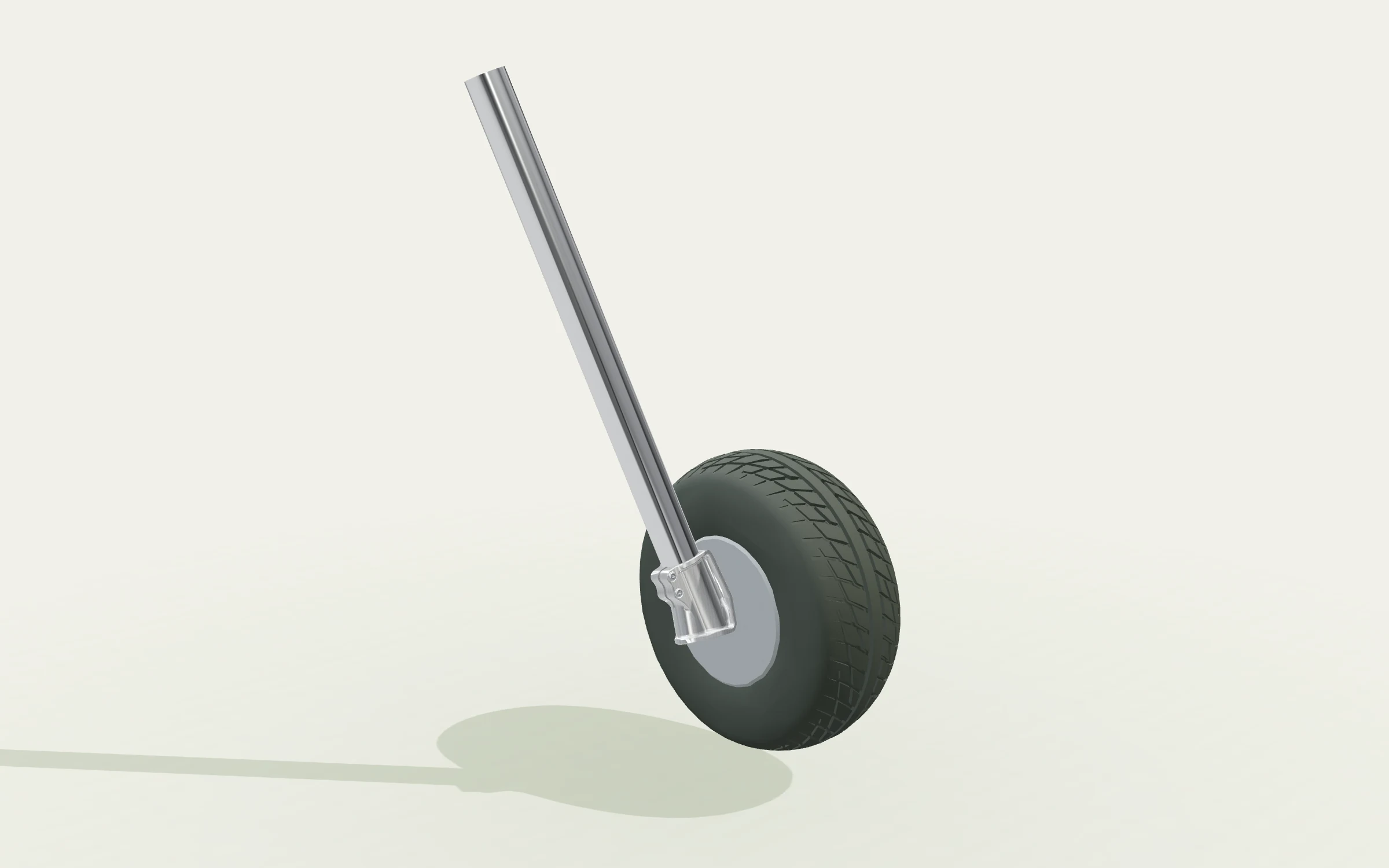
Long-travel shock-absorbing struts support landing and ground movement. Electric wheel drives turn the undercarriage into a self-propelled platform.
 VIEW IN 3D ↗03 / FLIGHT CONTROL
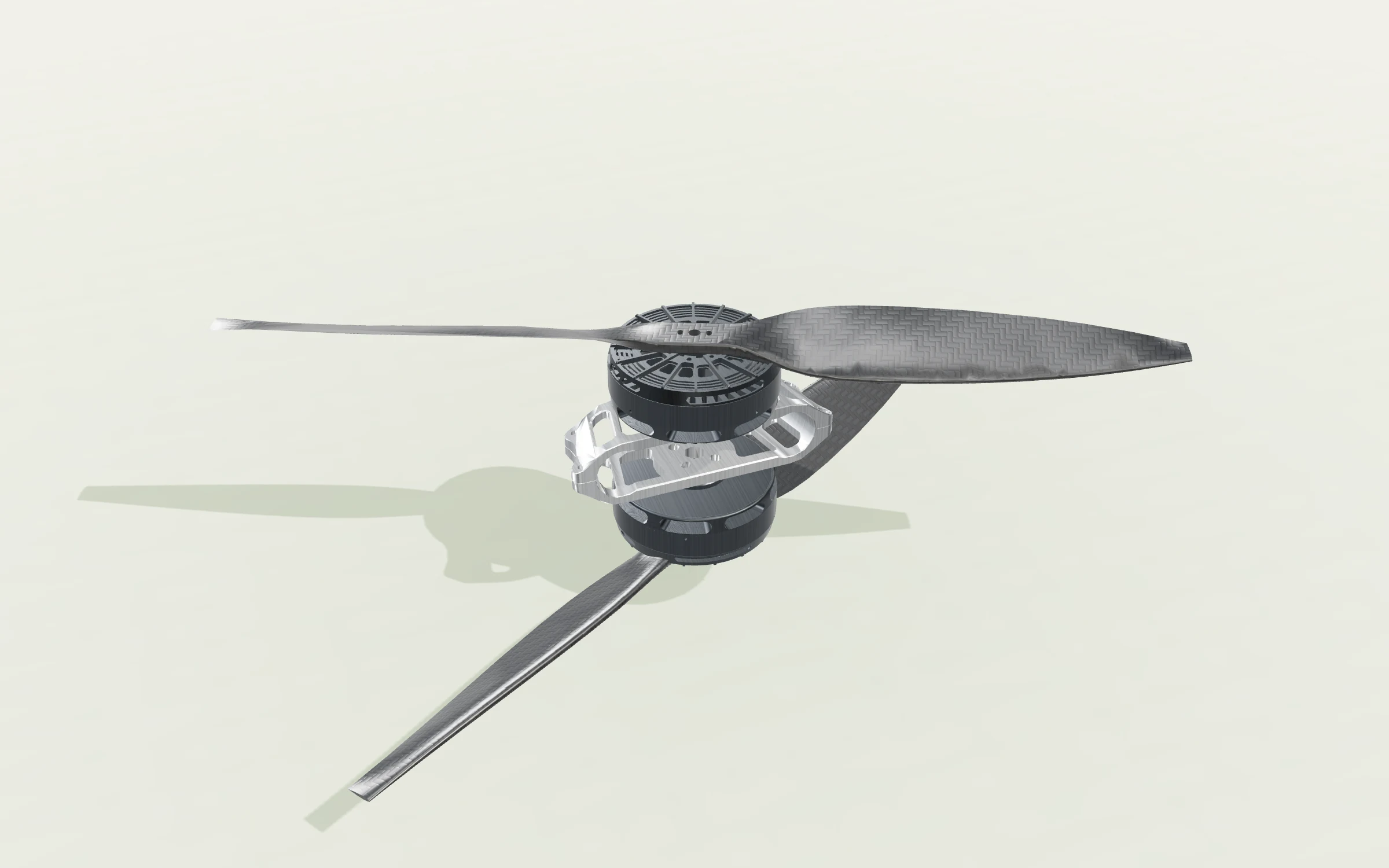
Three coaxial pairs provide six control propellers. Independent, redundant power supplies support the electric control system.
 VIEW IN 3D ↗04 / ROTOR BLADES
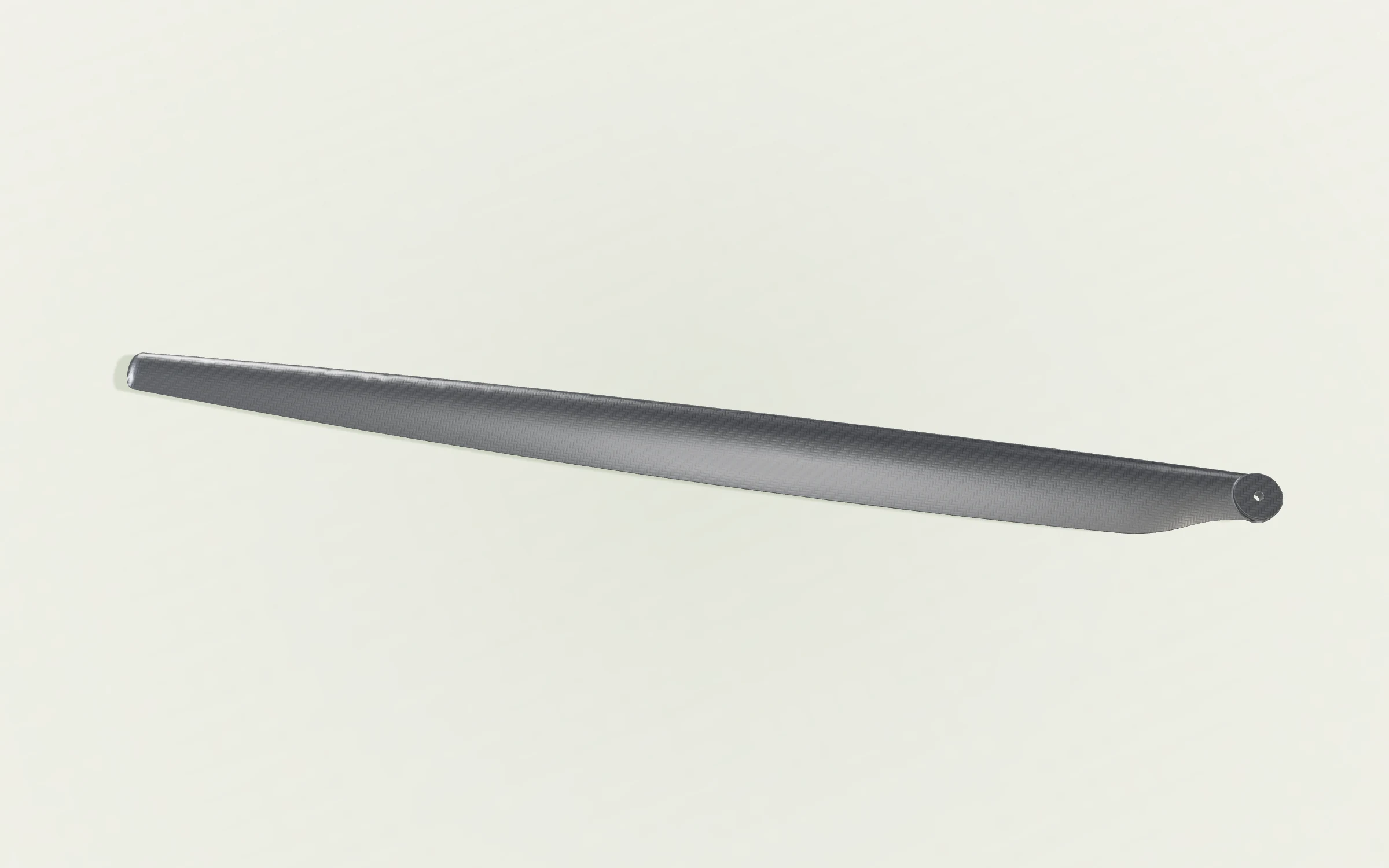
Carbon blades with reinforced titanium leading edges combine a thin profile with low-noise operation. TAMML is quieter than multicopters of comparable payload capacity.
ADAPT THE OUTER LAYER
Replaceable covers in IR-reducing fabric. Select camouflage for your surroundings, or a high-visibility rescue finish.
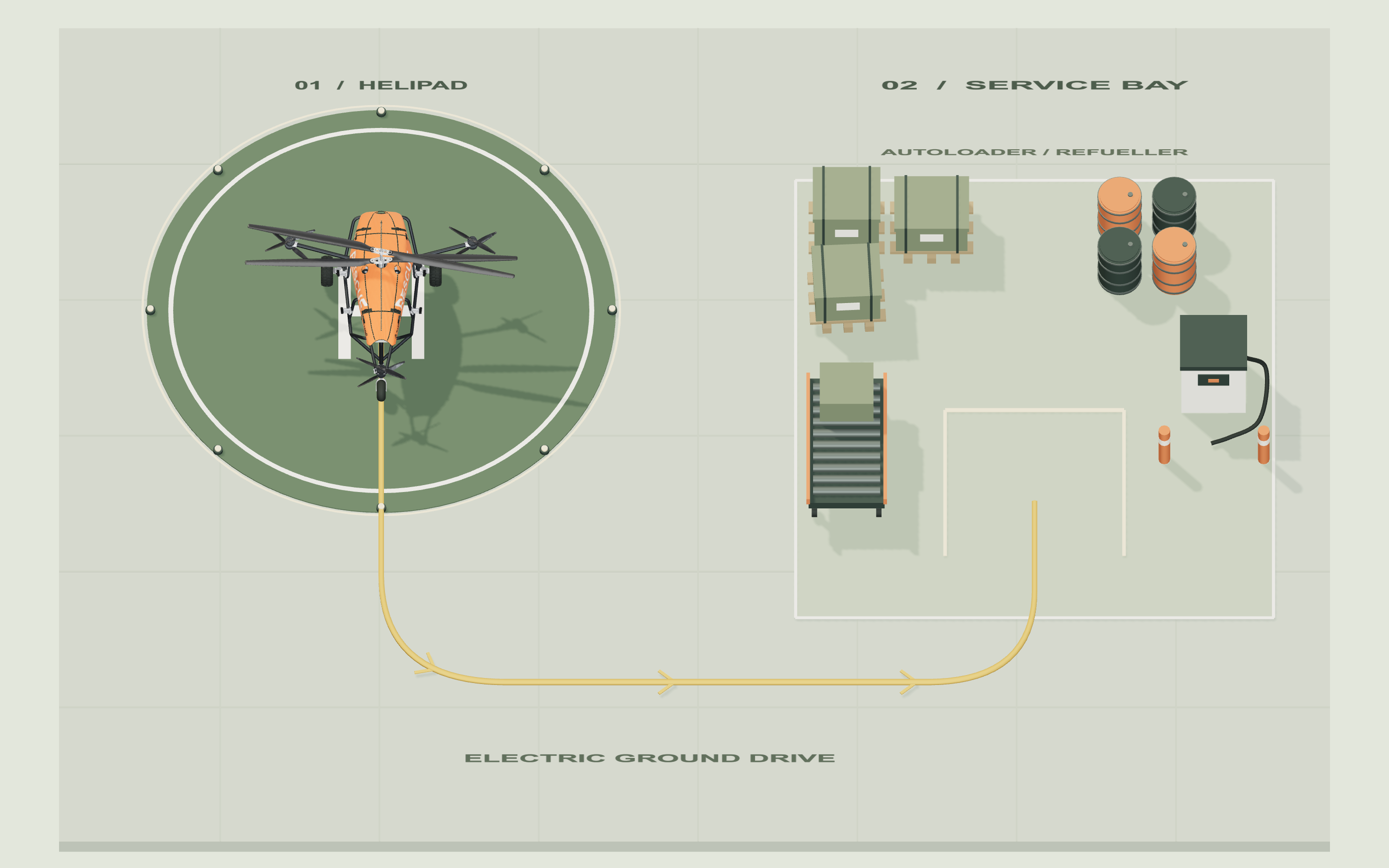
TAMML moves under its own power across the apron and around the take-off area. Onboard autonomy navigates around obstacles and yields to traffic. Electric wheel drives provide up to 50 km of ground travel, with the ability to turn on the spot and position the aircraft for servicing.
Full-sphere camera coverage
mmWave radar
Weight-on-wheels sensors
Full-sphere sensing, automatic airborne collision avoidance and onboard ground autonomy work alongside a complete communications stack and local service console.
01 / ELECTRONICS & ESC
A dedicated onboard assembly brings together the electronics and electronic speed controllers. It connects the aircraft’s sensing, control and electric propulsion systems.
02 / SATELLITE CONNECTIVITY
An onboard satellite terminal supports remote connectivity. Terminal options include Starlink, Starshield and Amazon Leo, according to the aircraft configuration.
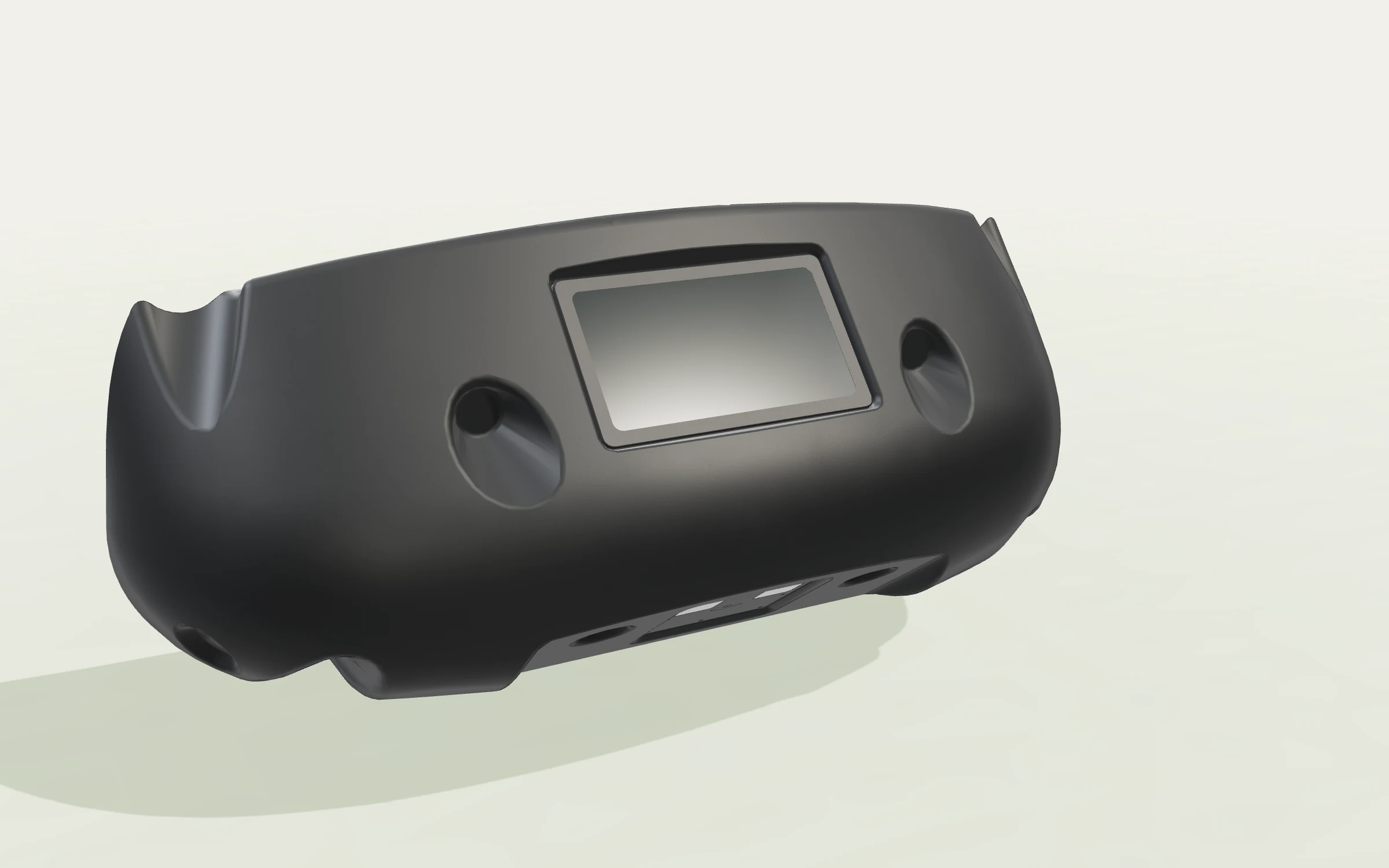
03 / SENSING & LOCAL CONTROL
A local camera, sensor block and onboard terminal display support ground servicing and control without an external terminal. They form part of a distributed sensing system with multiple cameras, mmWave radar and weight-on-wheels sensors.
PERCEPTION & AUTONOMY
Multiple cameras provide a combined view in all directions, covering both the upper and lower hemispheres. Multispectral sensing and mmWave radar complement the camera network.
In flight, the aircraft detects collision risks and automatically manoeuvres to maintain separation from surrounding traffic.
Edge processing handles local navigation on the aircraft. TAMML routes around obstacles, yields to traffic and continues to its loading, unloading or refuelling position.
THE COMMUNICATIONS STACK
Voice commands over conventional VHF radio add another way to interact with the aircraft.
Service interval
MTBO
Operating temperature
Set your fuel and payload. See how far TAMML can fly and return, how fast it can travel, and how the load fits within 260 kg.
25 L standard + 4 × 20 L external · Jet A-1 / JP-8
Cargo and mission equipment
70 kg available
Fuel and payload share the same 260 kg takeoff limit.
260 kg maximum takeoff mass · 15% fuel reserve.
Fly out and return
Outbound + return legs
Level flight at takeoff mass
Hover to compare · Click or drag the curve to select · Sliders always stay within 260 kg
Mission radius covers equal outbound and return legs with the same payload, retaining 15% of the fuel on board. The solid radius curve holds your selected payload. Its dashed continuation reduces payload when more fuel would exceed 260 kg. The speed chart holds your selected fuel on its solid section and reduces fuel on its dashed section. Every point follows the same load-balancing rule as the sliders. Cruise speed is 80% of maximum departure speed; fuel consumption follows the aircraft’s changing mass throughout the flight.
Fuel capacity is 25 litres in the standard tank, plus four external 20-litre tanks: two on each side. Total capacity is 105 litres. The fuel and payload controls balance automatically within the maximum takeoff mass.
Radius and endurance at 90 km/h cruise, including a 15% fuel reserve.
| Payload | Radius · climb config. | Endurance · climb config. | Radius · max load | Endurance · max load |
|---|
Coaxial lift. Distributed electric control.
A modular aircraft built around utility.
LET’S TALK ABOUT YOUR MISSION
TAMML / Sentinel Unmanned
Medium-lift. Multi-mission.